


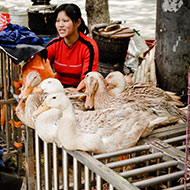
Conservationists call for the ban to be made permanent
The Chinese Government has announced a nationwide ban on wildlife trade in supermarkets, markets, restaurants and e-commerce platforms in a bid to curb the coronavirus outbreak, news agency Reuters reports.
In a joint statement, the country’s market watchdog, agricultural ministry, and forestry bureau said any places that breed wildlife should be isolated, and the transportation of wildlife should be banned. The ban came into force on Sunday (26 January).
According to the World Health Organisation, coronavirus has infected more than 2,700 people globally and killed 80 people in China. Researchers believe the virus originated in wildlife sold illegally in a live animal market.
Dr Christian Walzer, chief global veterinarian for the Wildlife Conservation Society, welcomed the ban but said that it needs to be made a permanent fixture.
“The Chinese government’s announcement today to temporarily ban the sale of wildlife in markets, restaurants and over e-commerce needs to be permanent. We congratulate the government for taking this important first step,” he said.
“The banning of such sales will help end the possibility of future outbreaks of zoonotic diseases, such as the Wuhan coronavirus. We learned this lesson with the outbreak of another zoonotic disease, SARS, in 2002. The pattern will keep repeating itself until we ban, not only in China but in other countries, the sale of wildlife, specifically for food and in food markets.”
Dr Walzer continued: “Poorly regulated, live animal markets mixed with illegal wildlife trade offer a unique opportunity for viruses to spillover from wildlife hosts into the human population and for viruses to exchange viral components amongst the multiple species being traded creating new viruses with new host spectrums.”


 Companies marketing medicines for small pets exempt from authorisation must submit their annual return to the Veterinary Medicines Directorate (VMD) by 30 November 2026.



