


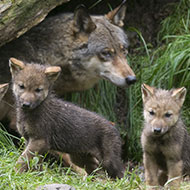
Dogs’ ability to interpret human cues also exists in wolves
In a study conducted by the University of Stockholm, researchers were surprised to find that wolf puppies showed interest in a ball thrown for them and even played fetch with a stranger upon encouragement.
The team of scientists raised wolf and dog puppies from the age of ten days, under identical conditions, and carried out various behavioural tests on them with the intention of assessing how domestication affects behaviour.
One of these tests consisted of a person with no prior training or experience, whom the puppy did not know, throwing a tennis ball across the room and encouraging the puppy to bring it back.
Researchers did not expect any interest from the wolf puppies, as it has previously been hypothesised that the cognitive ability to understand social cues given by a human only arose in dogs after they were domesticated by humans.
This assumption was confirmed by the first two litters the team worked with, as none of the puppies showed interest in the ball. However, three eight-week-old puppies from the third litter tested not only spontaneously chased the ball, but also responded to the encouragement from the unfamiliar person and brought it back.
Christina Hansen Wheat of Stockholm University’s Department of Zoology said: “When I saw the first wolf puppy retrieving the ball I literally got goose bumps. It was so unexpected, and I immediately knew that this meant that if variation in human-directed play behaviour exists in wolves, this behaviour could have been a potential target for early selective pressures exerted during dog domestication.”
The team will now continue to study the data they have collected over three years, to gain further insight into the behavioural differences and similarities between dogs and wolves.


 Companies marketing medicines for small pets exempt from authorisation must submit their annual return to the Veterinary Medicines Directorate (VMD) by 30 November 2026.



