


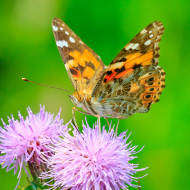
Warm, wet year brings influx of migrant species
This year’s varied and changeable weather has attracted new visiting species from abroad and has had both positive and negative effects on the UK’s resident wildlife, says the National Trust.
Warmer temperatures at the start of the year, which plummeted in February and March before warming again brought many migrant species to UK shores, such as the painted lady butterfly (Vanessa cardui), which was seen arriving en masse for the first time in a decade.
Foreign birds were also seen in the summer and autumn, including the American black tern and red eyed vireo. The brown booby, a rare, vagrant bird native to the Caribbean and Venezuela, was seen for the first time in Kent and two were spotted in Cornwall later in the year.
Ben McCarthy, head of nature conservation and restoration ecology said: “Sightings of migrant insects and birds are becoming more common. This is a result of our changing climate.
“Although this can seem exciting, the obvious flipside is how these changes will start to affect some of our native species already under pressure from intensive land use, habitat fragmentation and climate change.
“By improving the condition of our remaining habitats and increasing patch size it is easier for species to move across landscapes in response to our changing environments. It also means that when they arrive in their new location there is habitat to support them.
UK resident species that did well included Sandwich terns, whose numbers increased from 120 to 820 pairs due to a good supply of sand eels and small fish at Blakeney Point in Norfolk.
Little terns also saw increased numbers this year, after no chicks fledged in 2018 due to heavy kestrel predation resulting from a lack of voles for the kestrels to feed on. Recovering field vole numbers and supplemental feeding by National Trust rangers improved the wellbeing of the little tern in 2019.
The report also states that grey seals appear to be thriving, despite the 50 per cent mortality rate of seal pups at National Trust locations.
Many species were negatively affected by the fire on Marsden Moor over the Easter weekend, which destroyed 700 hectares of land containing the habitats of hundreds of species including mountain hares and rare ground-nesting birds, such as curlew and twite.
Heavy periods of rainfall this year affected many species including water voles and some seabirds, with arctic terns, puffins, guillemots and shags all suffering losses on the Farne Islands, after 87.4mm of rain fell in just 24 hours in June 2019, over three times the average.
Keith Jones, climate change expert at the National Trust said: “This year’s changeable weather is a symptom of the warming climate. The more our temperatures go up – the more erratic our weather will become.
“This will force changes to the lifecycles of many species as food webs are knocked out of sync.
“Like all conservation organisations, we are working hard to protect and care for habitats, and everyone has a part to play in the battle against climate change.”


 Companies marketing medicines for small pets exempt from authorisation must submit their annual return to the Veterinary Medicines Directorate (VMD) by 30 November 2026.



