


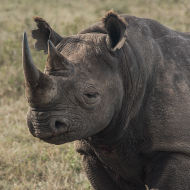
Organisations collaborate in one of the largest international rhino translocations
In a recent three-month counter-poaching deployment in Malawi, soldiers from the Second Battalion Royal Gurkha Rifles worked with African Parks to train new and existing counter-poaching rangers.
Based in Liwonde National Park, soldiers also assisted with the offloading of black rhinos that had travelled by air and road from KwaZulu-Natal in South Africa. This project was led by African Parks in partnership with Ezemvelo KZN Wildlife, Malawi’s department of national parks.
Black rhinos are currently critically-endangered, with around 5,500 living in the wild. The teams’ hope is that this project will help to boost the rhino population in the area and contribute to the preservation of the species.
Commanding Officer of the British Army Counter-poaching Team in Liwonde, Major Jez England said: “This latest counter-poaching deployment has been hugely successful. Not only do we share skills with the rangers, improving their efficiency and ability to patrol larger areas, but it also provides a unique opportunity for our soldiers to train in a challenging environment.
“Helping with the rhino move was a fitting end to our time in Malawi, getting up close to the animals we are here to help protect was an experience the soldiers won’t forget."
The counter-poaching ranger partnering programme is funded by Defra and delivered by the British Army. Between 2014 and 2021, the UK Government has committed over £36 million to combating the illegal wildlife trade.
The army has helped to train 200 rangers in Malawi so far. Because of this – along with the projects managed by African Parks and the department of national parks and wildlife – no high-value species have been poached in Liwonde since 2017.


 Companies marketing medicines for small pets exempt from authorisation must submit their annual return to the Veterinary Medicines Directorate (VMD) by 30 November 2026.



