


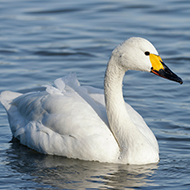
Arrival spurred on by drop in temperature
More than 50 Bewick’s swans have arrived at the Wildfowl and Wetlands Trust (WWT) in Slimbridge, Gloucestershire. This marks the end of the swan’s 4,000km migration, and traditionally signifies the start of winter.
The arrival of such a large number of swans at once is known as a ‘swanfall’. With this year’s taking place more than five weeks after the arrival of the first Bewick’s of the season, Gastro and Roux, who flew in on 27 October.
The Bewick’s hail from Arctic Russia. Migrating to the UK for the comparatively warmer climate and ice-free wetlands.
Swan research assistant Steve Heaven said: “The arrival of the first ‘swanfall’ is always a fantastic spectacle, and we now have over 70 here, with more arriving each day.
“We are still on the lookout for some of our regulars, including Croupier, who has been a favourite of visitors here at Slimbridge for almost three decades.
We’re anxiously keeping our fingers crossed that he might still arrive, but in the meantime, we’re delighted to see his son, Croupie, back on the pond, along with his mate, Wheel.”
WWT staff identify and record individual swans using the unique black and yellow beak markings of every new arrival. Giving names to first-time visitors and monitoring families.
More than 10,000 swans have been recorded in the 50 years that this process has been being conducted. WWT continues to use this data in their research and conservation efforts.


 Companies marketing medicines for small pets exempt from authorisation must submit their annual return to the Veterinary Medicines Directorate (VMD) by 30 November 2026.



