


Dog welfare campaigns ‘do not promote behaviour change’
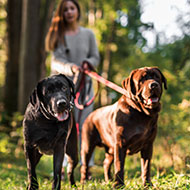
"Any educational messages for dog owners need to be specific what they want owners to do".
Welfare campaigns that tell people to be “responsible dog owners” do not help to promote behaviour change, according to new research.
Scientists at the University of Liverpool carried out interviews with people who considered themselves to be responsible dog owners, despite there being a great variation in key aspects of their dog-owning behaviour. The results are published in the journal, Anthrozoös.
“Policy and campaigning messages related to dog ownership and welfare tend to focus on the concept of being a responsible owner,” explained lead researcher Dr Carri Westgarth. “However, while 'responsible dog ownership' has considerable appeal as a concept, how it is perceived and interpreted has not been studied in-depth.”
In the study, researchers set out to gain a better understanding of beliefs and views about responsibility in dog ownership. They conducted in-depth interviews with dog-owning households and shorter interviews with dog owners while walking their dogs or representing their breed at a dog show.
The interviews centred on dog walking and other aspects of campaign messages, such as aggression, dog fouling and neutering. Dr Westgarth also reflected on her own experiences of walking her three dogs, and on conversations with other owners over the two-year study.
“It’s clear from our research that responsible dog ownership means different things to different people at different times. It emerges from a blurred intersection of the needs of dogs, owners, and others, where often the dog comes first,” she said.
“Dog owners do what they perceive to be best for their individual dog, even if this goes against general advice given such as how often dogs need walking or neutering campaigns. Yet this perception may be different from to what others feel is best for that dog, or how people who are impacted by the dog want the dog and their owner to behave.
“Therefore, simply telling owners that they should 'be responsible' is of limited use as a message to promote behaviour change because they already believe that they are. Any educational messages for dog owners need to be specific what they want owners to do and explain why that is in the best interest of the dog that they love so much."


 Eligible members of BEVA will be able to vote for their Council team until Monday, 17 August 2026. Members will have received an election email on 17 July.



