


Owners urged to carefully monitor how much exercise their pet receives
Working and competition dogs should be given one day off a week to allow their muscles and tendons to recover.
That is according to new guidance from Hartpury University, following research by animal science lecturer, Aisling Carroll.
Ms Carroll advises that working and competition dogs are exposed to more stresses and strains than the average pet dog.
“Canine sports medicine and rehabilitation professionals have observed that agility dogs trained at a young age to weave or jump and that may be trained repetitively, have an increased risk of injury or develop problems later in life, such as chronic spinal issues,” she said.
“It was found that agility dogs experiencing severe lumbosacral disease had frequently had a history of being overtrained at a young age. These were most commonly larger, more heavy-set breeds, such as golden retrievers.
“This condition appears to be much less common in dogs that began intensive agility training when physically mature.”
Ms Carroll offered the advice based on her studies at Hartpury University and an examination of previously published research.
She also said that dog owners could be putting their pet’s life at risk by not carefully monitoring how much exercise they have each day.
“Dog owners are recommended to walk their dog daily, to keep the animal physically active, to prevent it gaining too much weight, and to provide mental stimulation,” she said. “But depending on the breed, because of differences in their genetic make-up, age and size of the dog, the physical requirements and limits to exercise will differ.”
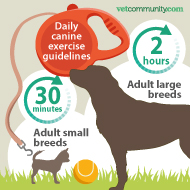
She continued: “Toy breeds, for instance, such as Chihuahuas, require up to 30 minutes’ exercise a day as adult dogs, while larger breeds, such as Labradors, need more than two hours’ exercise daily.
“Owners need to be aware that some dogs may push themselves beyond safe limits, particularly in multi-dog households where young dogs are exercised in a similar way to adult dogs."


 Eligible members of BEVA will be able to vote for their Council team until Monday, 17 August 2026. Members will have received an election email on 17 July.



