


DNA mutation linked to breathing issues in dogs
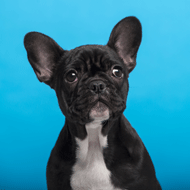
The mutated version of the ADAMTS3 gene was common in French and English bulldogs, scientists found.
Scientists have discovered a DNA mutation that is linked to breathing problems in dogs, including brachycephalic breeds.
Difficulty breathing is generally associated with breeds such as pugs, English bulldogs and French bulldogs. However, scientists have said the mutation is also carried by Norwich terriers, which have proportional noses.
A research team led by the Roslin Institute analysed DNA from more than 400 Norwich terriers. Vets also carried out clinical examinations of the dogs’ airways to check for signs of disease.
A mutation was found in the ADAMTS3 gene, which is not linked to skull shape but has previously been found to cause fluid retention and swelling. The mutated version of the gene was also common in French and English bulldogs, which researchers say could explain why some dogs suffer breathing issues and complications after surgery to correct the problem.
Researchers suggested that fluid retention in the tissue that lines the airways could result in breathing problems for dogs with the mutation. The findings have been published in the journal PLOS Genetics.
Popular flat-faced breeds, such as pugs and French bulldogs, are known to be commonly affected by brachycephalic obstructive airway syndrome (BOAS). Scientists previously thought their extreme facial conformation was the only explanation for their breathing problems, but Norwich terriers suffer from a similar problem called upper airway syndrome.
Lead author Dr Jeffrey Schoenebeck said: “BOAS is a complex disease. Although skull shape remains an important risk factor, our study suggests that the status of ADAMTS3 should be considered as well. More studies are needed to dissect the complex nature of this devastating disease.”
The findings could lead to genetic tests that could help vets identify at-risk animals, helping breeders to avoid producing affected puppies.


 Eligible members of BEVA will be able to vote for their Council team until Monday, 17 August 2026. Members will have received an election email on 17 July.



