


Homemade cat food recipes ‘could be harmful’
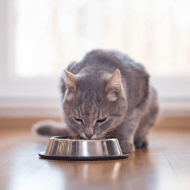
Many recipes had less than 50 per cent of the recommended allowances of several essential nutrients.
A new study suggests the majority of homemade cat food recipes found online are unlikely to provide cats with all essential nutrients.
Some recipes even contained potentially toxic ingredients, according to researchers at the University of California, Davis, who examined 114 recipes from online sources and books. Recipes were written by a mixture of vets and non-vets.
Findings show 40 per cent of the recipes did not provide any feeding instructions, while the remainder lacked detail or were unclear. Just 94 per cent supplied enough information for computer nutritional analysis, and of these, none provided all the essential nutrients to meet national guidelines.
Recipes were found to lack nutrients regardless of whether they were written by vets or non-vets, but those authored by vets had fewer deficiencies. Most recipes lacked concentrations of three or more nutrients, with some lacking adequate amounts of up to 19 essential nutrients.
Many recipes had less than 50 per cent of the recommended allowances of several essential nutrients, including choline, iron, zinc, thiamin, vitamin E and manganese. According to researchers, whether or not these diets would be harmful to cats would depend on feeding instructions, how long the cat has been fed the diet, the cat’s health and the level of nutritional deficiency.
Worringly, seven per cent of recipes contained ingredients that are potentially toxic to cats, such as garlic or garlic powder, onions and leeks. Some also called for raw animal products, but did not mention the potential risk of bacterial contamination, while recipes that included bones did not state the importance of grinding them to prevent gastrointestinal tears.
Only five recipes, all written by vets, met all but one of the essential ingredients.
Lead author Jennifer Larson said there was a surge in US cat owners switching to homemade diets after toxic substances were found in commercial pet food imported from China over a decade ago. However, this is thought to be the first time researchers have examined homemade recipes for healthy adult cats.


 Eligible members of BEVA will be able to vote for their Council team until Monday, 17 August 2026. Members will have received an election email on 17 July.



