


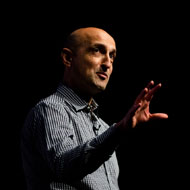
Opening ceremony looks at the importance of being self-aware
British journalist and author Matthew Syed has spoken out about the importance of self-awareness and how it can help people to enjoy a successful professional life.
Speaking at BSAVA Congress on Friday (5 April), the former Olympic table tennis star highlighted the psychological and cultural factors that shape high performance in sport, science and many other fields.
He stressed that there are two ways of looking at success. It is either fixed by talent, predisposition and intelligence or it is something that will grow through discipline, practice and self-evaluation.
Mr Syed gave a number of examples where professionals he has worked with have examined their own shortcomings and worked hard to overcome them. He explained that when ghostwriting David Beckham’s autobiography, his subject insisted that his legendary free-kick taking skills were a result of hours of practice, rather than natural ability.
In another example, Mr Syed spoke about how a similar ability to learn from mistakes has dramatically cut the number of people dying in aviation accidents. He said this was achieved by encouraging a culture in which staff are willing to report near-miss events.
In contrast, 45,000 people a year in the US died from central line infections because senior doctors would not admit to mistakes. Mr Syed claimed that self-justification and error concealment was and still is a key characteristic of the medical profession.
He spoke about how it is common for professionals not to admit their mistakes over fears they will be punished, but added that change can occur when the system encourages the adoption of a ‘no blame culture’.
He concluded there is no place for a dominance hierarchy in the modern world. Respect for the knowledge gained by senior members of a professional team should not prevent colleagues from offering opinions on solving a shared problem.
“Expertise is not about how much we know - it’s about finding what we don’t know,” he said.
Image (C) Paul Clarke Photography.


 Companies marketing medicines for small pets exempt from authorisation must submit their annual return to the Veterinary Medicines Directorate (VMD) by 30 November 2026.



