


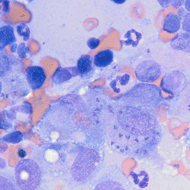
Dog with no travel history thought to have contacted disease from imported dog
Vets say they have diagnosed the first case of dog-to-dog transmission of leishmaniosis in a UK dog with no history of foreign travel.
The team are warning owners and vets to be extra vigilant for possible cases of the disease, even in dogs without a direct travel history.
According to a paper published in Vet Record, a three-year-old shih tzu was diagnosed with leishmaniosis after presenting with a three-week history of weight loss, seborrhoea, vomiting and diarrhoea.
While the dog had not travelled abroad, received a blood transfusion or been used for breeding, it had lived with another dog that was imported from Spain and euthanised six months previously due to severe leishmaniosis. Researchers said this most likely represents a case of dog-to-dog transmission.
Myles McKenna, of the Royal Veterinary College, said: “It is important to take note of this first reported case of likely dog-to-dog transmission of Leishmania infantum in the UK. Historically we had considered this to be a condition affecting dogs with a travel history to areas where Leishmania infantum is endemic.
“Dog-to-dog transmission in non-endemic areas has previously been reported, for example in the USA, but this case serves as a reminder to UK veterinary surgeons that we must be vigilant for conditions such as Leishmania in non-travelled dogs and that alternative transmission mechanisms do exist.”
The news comes just a week after vets reported a separate case of leishmaniosis in a dog with no history of overseas travel. In this case, it is thought the owners may have inadvertently brought infected sand flies back in their luggage following a trip to Spain.
Reporting the case in Vet Record letters, ESCCAP’s Ian Wright and Samantha Baker of Vets4Pets said: ‘It serves as a reminder that we should not be complacent about the risk of Leishmania infantum establishing in the UK, even in the current absence of the sand fly vector.’
Image © Charalampos Attipa


 Eligible members of BEVA will be able to vote for their Council team until Monday, 17 August 2026. Members will have received an election email on 17 July.



