


New DNA tests to help prevent blindness in border collies
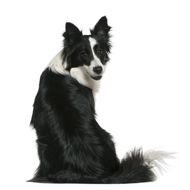
"We hope our research will help to reduce the number of dogs that go blind from this disease.”
Scientists have discovered a mutation in the OLFML3 gene which causes sudden blindness in border collies.
The findings have resulted in several companies developing genetic tests for the condition, called goniodysgenesis - or gonio - to avoid affected dogs being used to produce puppies.
In severe gonio, the affected dog’s eyes do not develop properly, which can cause glaucoma, leading to sudden loss of sight. Sudden blindness in border collies was first seen in Australia in the late 90s, then in the UK in relatives of the original dogs. Breeders suspected there may be a genetic cause.
Researchers from the Roslin Institute collected DNA from dog saliva samples and compared those with healthy eyes, to those with symptoms of severe gonio. They found a genetic mutation in OLFML3, which is involved in the early stages of eyeball development.
All dogs who suffered blindness had two copies of the mutation gene. The research paper has been published in the journal G3: Genes, Genomes, Genetics.
Dr Carys Pugh, from the University of Edinburgh, said: “We are delighted that our findings have directly led to a genetic test for this condition. We hope our research will help to reduce the number of dogs that go blind from this disease.”


 Eligible members of BEVA will be able to vote for their Council team until Monday, 17 August 2026. Members will have received an election email on 17 July.



