
Your data on MRCVSonline
The nature of the services provided by Vision Media means that we might obtain certain information about you.
Please read our Data Protection and Privacy Policy for details.

In addition, (with your consent) some parts of our website may store a 'cookie' in your browser for the purposes of
functionality or performance monitoring.
Click here to manage your settings.
If you would like to forward this story on to a friend, simply fill in the form below and click send.

Your friend's email:
Your email:
Your name:
 
 
Send Cancel

‘Worrying escalation’ of swine dysentery cases, NPA says
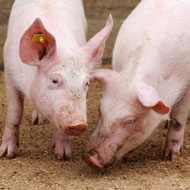
NPA said the cases continue the ‘worrying escalation’ of outbreaks in recent weeks.
Increased biosecurity and monitoring recommended 

The National Pig Association (NPA) is calling for increased biosecurity on pig farms after four new cases of swine dysentery were confirmed in one day last week.

Three cases were detected in North Yorkshire, one on a finisher unit, while a fourth case was identified on a finishing unit in Gloucestershire on 22 March.

Strict biosecurity and bio-containment measures are in place and treatment is ongoing at the units. One of the units is said to be ‘responding well’ to treatment. The origin of the outbreaks is not known, but investigations are underway, according to AHDB.

NPA said the cases continue the ‘worrying escalation’ of outbreaks in recent weeks. The association is warning farmers who have recently moved pigs from North Yorkshire to monitor them closely for the development of clinical signs.

AHDB stressed the importance of enhanced biosecurity and monitoring for clinical signs over the next few weeks, particularly in North Yorkshire and Gloucestershire.

Earlier this month, AHDB reported three outbreaks across three different counties in the north and east of the country over a period of two weeks.

Click here for NPA guidance on biosecurity measures.

Become a member or log in to add this story to your CPD history

Equine Disease Surveillance report released for Q4 2025

News Story 1
 The latest Equine Disease Surveillance report has been released, with details on equine disease from Q4 of 2025.

The report, produced by Equine Infectious Disease Surveillance, includes advice on rule changes for equine influenza vaccination.

Statistics and maps detail recent outbreaks of equine herpes virus, equine influenza, equine strangles and equine grass sickness. A series of laboratory reports provides data on virology, bacteriology, parasitology and toxicosis.

This issue also features a case study of orthoflavivus-associated neurological disease in a horse in the UK. 

Click here for more...
News Shorts
RCVS annual renewal fee for vets due

RCVS' annual renewal fee for veterinary surgeons is now due. Vets must pay their renewal fee before Wednesday, 1 April 2026.

This year's standard annual fee has increased to 431 from last year's 418. This is an approximately three per cent increase, as approved by RCVS Council and the Privy Council.

Tshidi Gardner, RCVS treasurer, said: "The small fee increase will be used to help deliver both our everyday activities and our new ambitious Strategic Plan, which includes aims such as achieving new legislation, reviewing the Codes of Professional Conduct and supporting guidance, and continuing to support the professions through activities such as the Mind Matters Initiative, RCVS Academy and career development."

A full breakdown of the new fees is on the RCVS website. Information about tax relief is available on the UK government website.

