


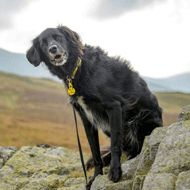
Nearly two thirds believe collar only needs to be worn outside the home
New research by the Dogs Trust suggests many owners are unaware that, by law, all dogs must be fitted with a collar and identification tag.
Under the 1992 Control of Dogs Act, dogs should have ID tags displaying their owner’s name, address and post code. However, 16 per cent thought that including a telephone number would suffice.
Furthermore, 63 per cent thought that their dog only needed to wear a collar outside the home.
Alex Jackson, the charity’s head of campaigns, said: “It is great that so many owners are aware of the need for their dog to be microchipped, but it is concerning that this awareness comes at the expense of dogs wearing more visible forms of identification…
“The details held on the tag and microchip containing the essential details of the owner is one of the simplest ways for a dog to be reunited with its owners should they become accidentally separated. We urge everyone to check they have a tag with the right information on today.”
The survey also revealed that some owners had not yet microchipped their pet, despite 90 per cent knowing it is a legal requirement.
Alex added: “The simple process of keeping microchip contact details up to date could be the lifesaving difference for a much-loved pet going home to their owner instead of potentially being put to sleep in a local pound if they aren’t reunited with their owner within seven days. But worryingly 41% of owners, who have had their dogs microchipped, said that they hadn’t got around to doing it.
“Sadly, there is still a stray dog problem in this country, and the combination of a lack of collar and tag or a microchip that hasn’t been updated could be the difference between a dog ending up in a Council-run pound or curling up in its bed at home."
Image © Brian Young


 Eligible members of BEVA will be able to vote for their Council team until Monday, 17 August 2026. Members will have received an election email on 17 July.



