


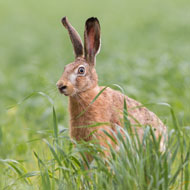
Scientists explore recent hare die-off
Dead hares in Essex and Dorset have tested positive for rabbit haemorrhage disease virus type 2 (RHDV2). Scientists say it is the first time the disease variant has been found in UK hares.
Researchers from the University of East Anglia (UEA) joined forces with local wildlife trusts, Defra and the APHA to determine the cause of hare deaths after members of the public began reporting sick and dead hares.
Lead author Dr Diana Bell said: “RHDV2 normally affects rabbits, but the disease is known to have jumped to European brown hares in Italy, Spain, France and Australia…
“RHDV2 is one of several pathogens we are finding in dead hares and it is too early to say which is currently the primary cause of the hare die-off. We are continuing to investigate other causes for the deaths.”
Last year members of the public were urged to photograph sick and dying hares, as well as collecting the bodies for autopsy.
Brown hares have suffered a national decline of more than 80 per cent in the past century, due to changes in agricultural practices. However, ongoing reports of dead and dying hares in the countryside has prompted fears that disease could also be contributing to the declines.
The team are continuing to collect dead hares for post mortem. If you find a freshly dead hare report it to Dr Bell by email: d.bell@uea.ac.uk


 Companies marketing medicines for small pets exempt from authorisation must submit their annual return to the Veterinary Medicines Directorate (VMD) by 30 November 2026.



