


‘Sizeable’ decline in disease causing mutation frequency across eight diseases
Genetic mutations that cause canine diseases reduced by nearly 90 per cent in dogs born eight to 10 years after DNA tests were introduced. This is according to a new study of eight diseases in eight dog breeds.
Scientists from the Kennel Club and the Animal Health Trust explored the long-term effect of breeders using DNA tests to avoid producing puppies with inherited conditions.
Data was examined on diseases such as progressive rod cone degeneration (prcd-PRA), spinocerebellar ataxia and primary lens luxation.
Results published in the PLOS ONE journal show a 12-86 per cent decline in disease causing mutation frequency in dogs born two to four years after DNA tests were introduced. The decline was nearly 90 per cent in dogs born eight to 10 years after the test.
Scientists conclude that dog breeders ‘appear to be incorporating the results of DNA tests into their selection strategies to successfully decrease the frequency of the mutation’.
Co-author Dr Tom Lewis, quantitative geneticist and genetics research manager at the Kennel Club, said: “Our research highlights the fantastic work that has already been carried out by those breeders and breed clubs that have been utilising and promoting DNA tests for years, while similarly demonstrating why those who haven’t been health screening should be doing so.”
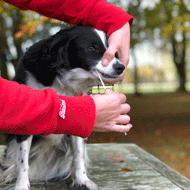
Image © Animal Health Trust


 Eligible members of BEVA will be able to vote for their Council team until Monday, 17 August 2026. Members will have received an election email on 17 July.



