


NexGard range approved for treatment of serious skin diseases
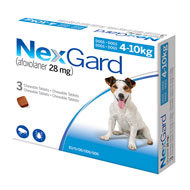
Nexgard was the first oral medication to treat both fleas and ticks in dogs.
NexGard and NexGard Spectra have been approved for the treatment of two serious skin diseases in dogs, demodicosis and sarcoptic mange.
Boehringer Ingelheim received approval to expand the label claims for the brands, both in the EU and Australia.
Nexgard was the first oral medication to treat both fleas and ticks in dogs, while NexGard Spectra also protects against parasites such as heartworm, lungworm and the most common gastrointestinal parasites.
Canine demodicosis, or demodectic mange, is considered to be one of the most severe skin diseases in dogs and can be life threatening. It is caused by the Demodex canis mite, which lives in the hair follicles and sebaceous glands. The majority of dogs are healthy carriers and are able to inhibit mite proliferation.
If, however, a dog develops generalised demodicosis, it usually means the immune system is compromised.
Sarcoptic mange is a generalised dermatitis and is often hard to diagnose. It is caused by the highly contagious skin parasite, Sarcoptes scabiei. Mites burrow into the skin and cause severe itching, which may result in scabs and hair loss.
Professor Fred Beugnet, head of global veterinary technical services at Boehringer, said: “Sarcoptes mites are not only easily transferred between dogs, but are zoonotic parasites which can be passed from animals to humans. This is why the treatment of this disease is crucial for animals’ as well as humans’ health.”
Approval to expand the label claim was granted on the basis of three experimental studies and two well-controlled field studies. According to Boehringer, the canine demodicosis study showed an overall efficacy of more than 98 per cent, while the studies on sarcoptic mange showed at almost 100 per cent efficacy after just one administration.


 Eligible members of BEVA will be able to vote for their Council team until Monday, 17 August 2026. Members will have received an election email on 17 July.



