


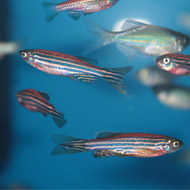
Study explores impact of mechanical loading and genetics
Zebrafish could offers insights into the early stages of diseases, including osteoarthritis, according to a new study conducted at the European Space Agency (ESA).
PhD students from the University of Bristol used a large diameter centrifuge (LDC) for 48 hours to find out whether zebrafish develop normally in altered gravitational fields.
It is hoped their work will shed light on the importance of mechanical loading and genetics during early life, in the onset of diseases.
Zebrafish larvae have returned to Bristol’s Hammond Lab so that students can study their joints and immune cells.
Researcher Elizabeth Lawrence said: "We have used hypergravity to simulate increased mechanical loading during a key time in joint development in zebrafish and will be looking at changes to the shape, structure and function of muscles, cartilage and bone in the larvae to see what impact it has had on their development.
The researchers were one of two teams chosen to run their research with the ESA Academy, as part of its annual campaign Spin Your Thesis.
Co-researcher Jessye Aggleton added: "It's been a fantastic opportunity to work with the European Space Agency Education team and those at the LDC. It's a unique project that has enabled our team to pitch, plan, and run a large-scale experiment from scratch.
"Collecting exciting data is just one of the great outcomes of the project and we've developed many other management and outreach skills along the way."


 Companies marketing medicines for small pets exempt from authorisation must submit their annual return to the Veterinary Medicines Directorate (VMD) by 30 November 2026.



