


Mystery hare deaths prompt concern in East Anglia
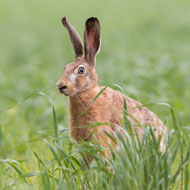
East Anglia is a stronghold for the brown hare, which has seen a national decline of 80 per cent in the past century.
Mysterious hare deaths in East Anglia could be down to myxomatosis, early investigations suggest.
In the past month, landowners, farmers and members of the public have reported sightings of obviously sick or dying hares. The University of East Anglia (UEA) has joined forced with Norfolk and Suffolk Wildlife Trusts to investigate the deaths.
Diana Bell, of the UEA, has received three independent reports from vets who have euthanised hares with advanced myxomatosis. She is seeking information from veterinary practices who have dealt with similar incidents in the past two weeks.
Myxomatosis, which is rarely seen in hares, was introduced to the UK in the 1950s to reduce wild rabbit numbers.
Dr Bell told BBC Radio 4’s Today programme that the disease has the potential to wipe out the hare population and that the hundreds of cases she is aware of are likely to be “the tip of the iceberg”.
“From the photographs that have been sent in to me we’ve definitely got a jump of myxomatosis to hares,” she added.
East Anglia is a stronghold for the brown hare, which has seen a national decline of 80 per cent in the past century. It is almost entirely absent from the south west of the country.
Ben McFarland, head of conservation at Suffolk Wildlife Trust, said: “The reports of hare deaths are obviously of great concern, especially considering the importance of the populations in this region.
"We are monitoring all sites closely and asking anyone who sees an animal that is dead or unwell to get in touch.”
Anyone seeing a freshly dead hare is asked to record its location, photograph the whole animal, especially the head and bottom, and send to Diana Bell at d.bell@uea.ac.uk.


 Companies marketing medicines for small pets exempt from authorisation must submit their annual return to the Veterinary Medicines Directorate (VMD) by 30 November 2026.



