


Link between Alabama rot and amphibian disease
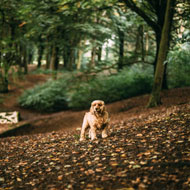
Researchers believe there are certain ‘hotspots’ for the disease and all affected dogs were walked on a similar type of terrain.
Ongoing research suggests there could be a link between Alabama rot in dogs and the amphibian disease red leg syndrome.
Fish vet Dr Fiona Macdonald is investigating the environmental organism, Aeromonas hydrophila, which has been identified as a possible cause of cutaneous and renal glomerular vasculopathy (CRGV) - also known as Alabama rot.
Nearly 80 dogs have now taken part in the research, of which a significant number have shown an immune response to the organism. Forty eight dogs showed titres of agglutinating activity at least four times the control, which was considered significant.
Of these, 25 had shown skin lesions when first presented at a veterinary practice, while a further four had been in close contact with an affected dog.
A hydrophila was isolated from swabs taken from lesions in five cases, while a number of dogs suspected of having the disease (but were treated successfully) had an immune response to the pathogen.
Some dogs that died from the disease do not appear to have had antibodies to the organism in the blood, but it can take two to three weeks for an immune response to mount.
A hydrophila is implicated in a ranavirus in the major amphibian disease, red leg syndrome, which is thought to have been introduced to the UK at least twice since the 1980s, most likely from North America. First found in the south of England, it has since spread across the UK, being found in Cornwall, Cardiff, Lancashire and Newcastle.
Researchers believe there are certain ‘hotspots’ for the disease and all affected dogs were walked on a similar type of terrain. None of the cases were in urban dogs - even those confirmed in London had been walked on Wimbledon Common or Hampstead Heath, where there is a combination of open water/streams and possibly disturbed muddy ground.
Future research will focus on CRGV hotspots to find out if A hydrophila can be recovered from water courses and explore the possible presence and effects of ranavirus/iridovirus on dogs’ skin.
Researchers will also widen the scope of antibody testing to include dogs walked in areas with no recorded cases, including urban dogs, using more sophisticated techniques to find the organism in lesions.


 Eligible members of BEVA will be able to vote for their Council team until Monday, 17 August 2026. Members will have received an election email on 17 July.



