


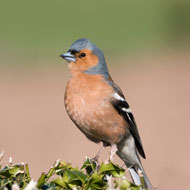
Virus and mites identified as source of the lesions
Reports of leg lesions in British finches peak during winter, according to a new study by the Zoological Society of London (ZSL).
Commonly known as ‘scaly leg’ or ‘tassel foot’, these lesions are growths on the legs and feet, seen in finches in Britain and mainland Europe.
Leg lesions in chaffinches are one of the most frequently reported signs of ill health in garden birds, but there has been no large-scale studies of the condition until now.
ZSL vets looked at data from volunteers taking part in the British Trust for Ornithology’s Garden BirdWatch survey.
Findings published in Scientific Reports suggest that, each week, 3-4 per cent of people recording chaffinches saw a bird with leg lesions in their garden. There was widespread distribution across Britain, with a peak in cases from November to March. This is thought to be down to the annual influx of migratory chaffinches from mainland Europe.
Chaffinches are the most likely garden bird to be seen with leg lesions, but the condition is also reported less commonly in a number of other finch species, including brambling, bullfinch, goldfinch and greenfinch.
Results from post-mortem examinations of more than 1,000 finches suggest there are two causes of this type of lesion - a virus (Fringilla coelebs papillomavirus) and mites (Cnemidocoptes). Both are thought to be transmitted through contact, so good hygiene measures are recommended, including cleaning bird feeders.
Image © John Harding/BTO


 Companies marketing medicines for small pets exempt from authorisation must submit their annual return to the Veterinary Medicines Directorate (VMD) by 30 November 2026.



