


Mushroom extract offers hope for honeybees
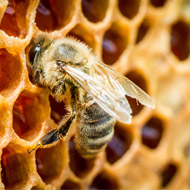
“Our greatest hope is that these extracts have such an impact on viruses that they may help varroa mites become an annoyance for bees."
Researchers in America have used mushroom extract to successfully treat dozens of honeybee colonies infested with varroa mites.
According to a paper published in Scientific Reports, colonies fed mycelium extract from the amadou and reishi mushrooms showed a 79‑fold reduction in deformed wing virus and a 45,000‑fold reduction in Lake Sinai virus compared to control colonies.
The study was carried out by Washington State University (WSU), the United States Department of Agriculture and colleagues at the firm Fungi Perfecti.
“Our greatest hope is that these extracts have such an impact on viruses that they may help varroa mites become an annoyance for bees, rather than causing huge devastation,” said WSU entomology professor Steve Sheppard.
“We’re excited to see where this research leads us. Time is running out for bee populations and the safety and security of the world’s food supply hinges on our ability to find means to improve pollinator health.”
It is hoped the findings will help falling honeybee colonies fight viruses that are known to play a role in colony collapse disorder.
“One of the major ways varroa mites hurt bees is by spreading and amplifying viruses,” Sheppard continued. “Mites really put stress on the bees’ immune systems, making them more susceptible to viruses that shorten worker bee lifespans.”


 Companies marketing medicines for small pets exempt from authorisation must submit their annual return to the Veterinary Medicines Directorate (VMD) by 30 November 2026.



