


Public urged to listen for tawny owls
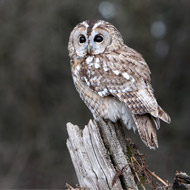
The survey aims to establish the impact of light pollution and urbanisation on tawny owl populations.
The British public is being urged to listen out for the familiar ‘hooting’ and ‘kee-wick’ calls of Tawny owls this autumn and winter, following concerns that the species may be in decline.
The British Trust for Ornithology (BTO) has launched the Tawny Owl Calling Survey in response to the species being moved to the Amber List of Birds of Conservation Concern. It calls on participants to listen out for tawny owls from their garden, local park or woodland between 30 September 2018 and 31 March 2019.
“The hooting or “twoo” sound is usually made by the male and is a territorial call,” researchers said on the BTO’s website. “You can sometimes hear a female responding to a male’s “twoo” call with a sharp “kee-wick”. Together this duet produces the classic “twit twoo” sound, which many people associate with these owls.”
Besides increasing understanding of tawny owl calling behaviour, the survey aims to establish the impact of light pollution and urbanisation on their populations. The data will build on information collected by more than 3,465 volunteers in 2005/06 when a similar survey found the time of day, moon cycle and weather impacted calling behaviour.
Claire Boothby, Survey Organiser at BTO, explained: "You can listen from pretty much anywhere you like for 20 minutes one evening a week. Anyone can take part, and the more people that do the better picture scientists at BTO will have of our Tawny Owls – you can even do it from the comfort of your bed."
For more information about the survey, visit the BTO website or email gbw@bto.org


 Companies marketing medicines for small pets exempt from authorisation must submit their annual return to the Veterinary Medicines Directorate (VMD) by 30 November 2026.



