


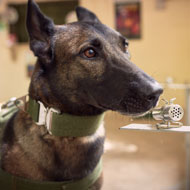
Small sample of air allows dogs to detect illegal wildlife products
Conservationists are trialling a new method for sniffer dogs to detect illegal wildlife products, using a tiny sample of air taken from shipping containers in Mombasa port.
The system, described as a potential ‘game changer’, is being trialled by WWF, TRAFFIC and Kenya Wildlife Service.
It is expected to lead to further seizures of illegal animals, plants and timber, as well as helping to identify those responsible for initial shipments.
The technology is known as RASCO (remote air sampling for canine olfactory). Air is suctioned out of the shipping container and passed through filters, which are then presented to the specially trained dogs, who can sniff out even the tiniest amounts of ivory, rhino horn and other illegal products.
Dogs are trained to sit if they detected a wildlife part, so that the container can be easily identified.
Prior to RASCO, the dogs went from container to container at Mombasa port and in transit. In their first six months there, 26 seizures were completed - a trend that has continued at the same rate ever since.
It is hoped the new technology could improve logistical issues faced previously, including the high volume of containers and hot working conditions for the dogs. It is now quicker and easier for officers and dogs and more containers can be checked in climate controlled rooms.
WWF has launched a petition urging leaders to make strong commitments to end wildlife crime.
Image © Juozas Cernius/ WWF-UK


 Eligible members of BEVA will be able to vote for their Council team until Monday, 17 August 2026. Members will have received an election email on 17 July.



