


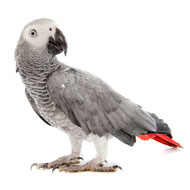
Birds reject instant rewards in favour of higher value food
Parrots are able to make economic decisions to receive higher quality rewards, a new study has found.
Economic decision making is considered cognitively complex, as it involves controlling one’s impulses and weighing up different options to decide whether waiting is worthwhile.
Scientists at the Max Planck Institute for Ornithology taught parrots how to trade three different types of token for food of low, medium or high value. The birds were subsequently given the choice between instant food and one of the tokens.
Findings published in Scientific Reports show that the immediate reward was only rejected if the token’s value equated to higher quality food. This demonstrates the birds’ ability to suppress their impulses for greater rewards in future.
Lead author Dr Auguste von Bayern said the research could shed light on how parrots make decisions in the wild.
She explained: “Given that wild parrots are so difficult to track, to date we know little about the ecological challenges most parrots encounter in their habitats in the wild, such as deciding where to go and how long to stay in a given feeding site.
“However, in our experimental setting we have found that they are capable of making surprisingly subtle decisions to maximise their payoff while minimising their effort.
"This is a fascinating indication that such decisions may matter greatly in their natural environment.”


 Companies marketing medicines for small pets exempt from authorisation must submit their annual return to the Veterinary Medicines Directorate (VMD) by 30 November 2026.



