


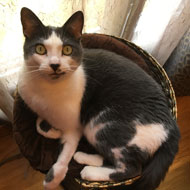
Four-year-old cat diagnosed with Glanzmann thrombasthenia
A rare congenital blood disorder has been reported in a cat for the first time, according to vets at the University of California Davis.
Critical care specialist Dr Ronald Li used state-of-the-art testing to diagnose Glanzmann thrombasthenia (GT) in four-year-old cat Miao Miao, after he was brought to UC Davis with persistent nosebleeds.
Based on previous medical issues, the cat’s owners knew he had some variation of a blood platelet disorder, causing problems with blood clotting.
Initial testing found he was not anaemic, had no evidence of inflammation, had a normal platelet count and was not bleeding into any of his other bodily cavities. But Dr Li found GT was causing Miao Miao’s platelets to be non-functional and lack expression of a protein called integrin.
In humans and dogs, GT is caused by a mutation in the genes responsible for making the protein that is essential for clot formation. Miao Miao’s DNA is currently being tested to characterise his genetic mutations. Dr Li hopes to identify the mutation so that cats can be tested in future.
There is currently no standard protocol for treatment, as Miao Miao is the first cat ever to be diagnosed with GT. UC Davis said the condition will likely put him at risk of spontaneous bleeding for the rest of his life.
Miao Miao is currently undergoing a method of treatment called Yunnan Baiyao - a Chinese herbal formula which has anti-hemorrhagic effects. His owners report that it appears to be effective in treating the bleeding.
Image courtesy of UC Davis


 Eligible members of BEVA will be able to vote for their Council team until Monday, 17 August 2026. Members will have received an election email on 17 July.



