


‘Zombie’ gene may protect elephants from cancer
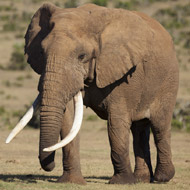
Elephants possess an anti-cancer gene that can return from the dead.
A ‘zombie’ gene inherent in elephants may help to protect them against cancer, according to new research.
Humans and animals have one copy of the master suppressor gene, p53. The gene allows the body to recognise un-repaired DNA damage, a precursor of cancer, and causes those damaged cells to die.
But researchers at the Universities of Chicago and Utah recently found that elephants have 20 copies of p53. This makes their cells far more sensitive to damaged DNA and therefore quicker to die.
Now, new research reported in the journal Cell Reports details the second element of this process: an anti-cancer gene that can return from the dead.
“Genes duplicate all the time,” said Vincent Lynch, assistant professor of human genetics at the University of Chicago and the study’s senior author. “Sometimes they make mistakes, producing non-functional versions known as pseudogenes. We often refer to these dismissively as dead genes.”
While studying p53 in elephants, Lynch and his team discovered a former pseudogene - leukaemia inhibitory factor 6 (LIF6) - that had, by some means, evolved a new on-switch.
LIF6, which had returned from the dead, had become a valuable working gene. When activated by p53, its function is to respond to damaged DNA by killing the cell.
The LIF6 gene makes a protein that goes to the mitochondria, the cell’s main energy source. That protein pokes holes in the mitochondria, causing the cell to die.
“Hence, zombie,” said Lynch. “This dead gene came back to life. When it gets turned on by damaged DNA, it kills that cell, quickly. This is beneficial because it acts in response to genetic mistakes, errors made when the DNA is being repaired. Getting rid of that cell can prevent subsequent cancer.”
The researchers note that exactly how LIF6 triggers apoptosis remains unclear and will be the focus of future studies.


 Companies marketing medicines for small pets exempt from authorisation must submit their annual return to the Veterinary Medicines Directorate (VMD) by 30 November 2026.



