


New DNA testing scheme for beagles
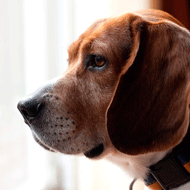
Lafora’s disease is an inherited condition that causes effects similar to epilepsy.
A new DNA testing scheme for Lafora’s disease in beagles has been approved by the Kennel Club.
In a press release, the Kennel Club said the scheme will give breeders the information they need to avoid producing puppies that may otherwise have been affected by this condition.
‘To find out which laboratories the Kennel Club is able to record results from, and which labs will send results direct to the Kennel Club, please refer to the worldwide DNA testing list at www.thekennelclub.org.uk/worldwide-dna-tests,’ it said.
‘Results issued after 1st August 2018 must contain at least two forms of identification on the DNA result certificate – it will be mandatory to include the dog’s microchip or tattoo number along with either the dog’s registered name or registered number.
‘Any test results that do not carry these identifying features will not be accepted.’
Lafora’s disease is an inherited condition that causes effects similar to epilepsy. Affected dogs normally show signs of the condition at around five to seven years of age, and the condition may progress slowly over many years.
Initial signs in affected dogs are shuddering or jerking which may be triggered by flickering lights, loud noises or sudden movements. As the disease advances, dogs can lose control of movement and develop blindness and dementia.
Because Lafora’s disease is an inherited condition, a dog that inherits just one copy of the abnormal gene (either from its mother or father) will have no signs of the disease. However, it will be a carrier and may pass the gene on to any offspring.


 Eligible members of BEVA will be able to vote for their Council team until Monday, 17 August 2026. Members will have received an election email on 17 July.



