
Your data on MRCVSonline
The nature of the services provided by Vision Media means that we might obtain certain information about you.
Please read our Data Protection and Privacy Policy for details.

In addition, (with your consent) some parts of our website may store a 'cookie' in your browser for the purposes of
functionality or performance monitoring.
Click here to manage your settings.
If you would like to forward this story on to a friend, simply fill in the form below and click send.

Your friend's email:
Your email:
Your name:
 
 
Send Cancel

Fresh insights into guinea pig social behaviour
They found that females tended to flee from each other during fertile periods, but otherwise would risk confrontation.

Females risk confrontation outside of fertile periods 

New research has shed light on how a female guinea pig’s sexual cycle could impact their social behaviour.

Guinea pigs use their intuition to decide whether to compete or escape, in order to maintain a hierarchy in which dominant animals take advantage.

Researchers from the University of Vienna analysed social behaviours and hormone levels to find out the effect of the oestrus cycle during encounters between females.

They found that females tended to flee from each other during fertile periods, but otherwise would risk confrontation. In animals that were not ready to mate, the stress hormone level increased and physical contact between the two females was more frequent.

There has so far been limited research on how the sexual cycle may shape female social behaviour in animals.

Lead author Lisa-Maria Glenk, commented: “These rodents live in social hierarchies, similar to many other mammals. Such hierarchies are established through confrontations between conspecifics.

"Animals with a good intuition of when to compete or withdraw are more successful and better integrated.”

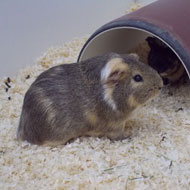
Photo © Lisa Glenk/Vetmeduni Vienna

 

Become a member or log in to add this story to your CPD history

Equine Disease Surveillance report released for Q4 2025

News Story 1
 The latest Equine Disease Surveillance report has been released, with details on equine disease from Q4 of 2025.

The report, produced by Equine Infectious Disease Surveillance, includes advice on rule changes for equine influenza vaccination.

Statistics and maps detail recent outbreaks of equine herpes virus, equine influenza, equine strangles and equine grass sickness. A series of laboratory reports provides data on virology, bacteriology, parasitology and toxicosis.

This issue also features a case study of orthoflavivus-associated neurological disease in a horse in the UK. 

Click here for more...
News Shorts
RCVS annual renewal fee for vets due

RCVS' annual renewal fee for veterinary surgeons is now due. Vets must pay their renewal fee before Wednesday, 1 April 2026.

This year's standard annual fee has increased to 431 from last year's 418. This is an approximately three per cent increase, as approved by RCVS Council and the Privy Council.

Tshidi Gardner, RCVS treasurer, said: "The small fee increase will be used to help deliver both our everyday activities and our new ambitious Strategic Plan, which includes aims such as achieving new legislation, reviewing the Codes of Professional Conduct and supporting guidance, and continuing to support the professions through activities such as the Mind Matters Initiative, RCVS Academy and career development."

A full breakdown of the new fees is on the RCVS website. Information about tax relief is available on the UK government website.

