


Criminologists speak out on BSL
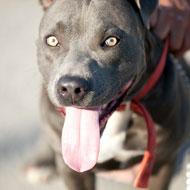
‘The UK does not have laws that discriminate against human children of criminals, in fear that they may also offend.'
Criminologists are calling for a move away from banning certain ‘dangerous’ breeds of dog in the UK, and focusing more on the way we, as a society, treat animals.
Dr Adam Lynes and Jenna Page, who are both lecturers in criminology at Birmingham City University, issued a statement on the current controversy over breed specific legislation (BSL), which bans four types of dog.
The Environment, Food and Rural Affairs Committee is currently conducting an inquiry into BSL, which has been criticised for failing to protect the public from dog attacks, as well as negative impacts on dog welfare. Animal rights group, PETA, however, recently called for Staffordshire bull terriers to be added to the banned list.
Lynes and Page argue that BSL - which has led to hundreds of pet dogs being killed, not because of their behaviour, but because of their heritage - is not in keeping with how UK legislation treats humans.
They wrote: ‘The UK does not have laws that discriminate against human children of criminals, in fear that they may also offend. Whilst such positivistic notions were once a popular theoretical position in the early 19th century, criminology and the criminal justice system has since moved away from such deterministic and simplistic notions.
“Our criminal law system is deed (or attempted deed) orientated which is rooted in one of the most important tenets of the criminal justice system: innocent until proven guilty. Sadly, BSL does not extend this closely guarded principle to dogs.”
They further point out that there are ‘astonishingly’ high numbers of recorded animal cruelty cases. In 2017 alone, the RSPCA emergency helpline received over one million calls about animal cruelty and 141,000 cases were investigated.
With this in mind, they said ‘it is clear that perhaps the focus should shift from these supposedly dangerous breeds, and instead ask important questions about how we, as a society, are treating animals more generally.’
BSL critics also argue that since the Dangerous Dogs Act came into force in 1991, hospital admissions due to injuries inflicted by dogs rose by 76 per cent between 2005 and 2015. Furthermore, 21 out of 30 human deaths caused by dog attacks since 1991 involved non-banned breeds.
There are rising calls for the legislation to focus on ‘deed not breed’, making dog owners and handlers responsible for their dogs, rather than banning certain breeds.


 Eligible members of BEVA will be able to vote for their Council team until Monday, 17 August 2026. Members will have received an election email on 17 July.



