


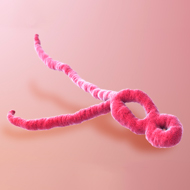
Bombali virus ‘has the potential to infect human cells’
Scientists have discovered a new Ebola virus in free-tailed bats in Sierra Leone, providing the strongest evidence yet that bats are the natural hosts of these viruses.
The new virus, Bombali virus, has the potential to infect human cells, researchers say, but it is not yet known whether it has infected people, or whether it is harmful.
It was discovered in insectivorous bats roosting in people’s homes, as part of the PREDICT Ebola Host Project.
Bombali virus is not the strain that caused the 2013-2016 Ebola outbreak, which killed more than 11,000 people in West Africa.
Despite more than 40 years of research, it is still not known where these viruses ‘hide’ between human outbreaks, which makes outbreak prevention a challenge.
Professor Aiah Gbakima, honourable minister of technical and higher education in Sierra Leone, said: “The Ebola virus outbreak in 2013-2016 devastated local communities here in Sierra Leone.
“It is critically important to understand more about where these viruses come from and what causes them to spill over into humans.
"There is still much to do to understand the transmission dynamics of Ebola virus, but the discovery of Bombali virus in bats is an important step in the right direction.”
Image © Scientific Animations (CC BY-SA 4.0)


 Companies marketing medicines for small pets exempt from authorisation must submit their annual return to the Veterinary Medicines Directorate (VMD) by 30 November 2026.



