


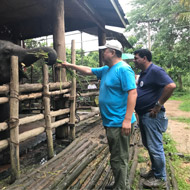
FOUR PAWS vet Dr Amir Khalil.
Elephant’s Lake will house captive and wild animals
International animal charity FOUR PAWS is preparing for the construction of one of the largest elephant sanctuaries in South-East Asia.
The charity said the building of the Elephant’s Lake sanctuary ‘is an important way to ensure these elephants are not simply killed or used as tourist attractions’.
Based in the Bago Region, the 17,000-acre sanctuary will see vets and experts rehabilitate former logging elephants as well as injured or orphaned wild elephants and prepare them for a life of freedom. The first inhabitants are expected to move in before the end of the year.
Last week, Chinese artist Al Weiwei visited the country to witness the plight of elephants first hand. It was a sad sight, with many elephants chained up and unable to live under natural conditions.
“I am so sad to see that. Elephants are quite similar to human beings, they are intelligent and emotional creatures,” he said. “Unfortunately, elephants have been placed in these conditions by humans. This is not right and not fair.
“Elephants deserve to live in freedom, but they have always been mistreated. If I could I would wish to release them immediately. They are born to be free and not captive like this. Let the elephants be free!”
The majority of working elephants in Myanmar belong to state-owned enterprises, the rest are privately owned. The animals have been abused in the Myanmar Timber Enterprise for decades, but the ban on the export of raw timer has rendered more than 1,000 elephants redundant.
The elephants are now considered useless by their owners and an increasing finial burden. The animals are therefore abandoned, killed or smuggled to neighbouring countries for tourism purposes.
“Working elephants live in terrible conditions,” reports FOUR PAWS vet Dr Amir Khalil, who accompanied Ai Weiwei during his trip. “They have been deprived of their natural habitat and are forced to vegetate chained in elephant camps. We share the common values that if humans have rights elephants also have rights. Most of these elephants could be rehabilitated and reintroduced into the wild.”
Image (C) FOUR PAWS


 Companies marketing medicines for small pets exempt from authorisation must submit their annual return to the Veterinary Medicines Directorate (VMD) by 30 November 2026.



