


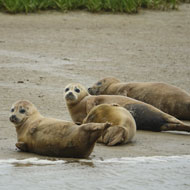
Survey aims to shed light on the habitat’s importance
Marine biologists are due to carry out the first ever survey of seal pups in the Thames Estuary, to shed new light on the importance of this critical habitat and identify emerging threats.
Led by ZSL, the study will combine aerial, shoreline and boat-based surveys of harbour seal pups, in key colonies along the Kent and Essex coasts.
The survey - running from 1-4 July - will also look at the impacts of various threats to the species, including wildlife disease, pressures from coastal construction projects, plastic pollution and inter-species competition for food and habitat.
Conservation biologist Thea Cox said: “The outer Thames Estuary has long been known as an important habitat for adult harbour seals – now, our first survey specifically of pupping in the outer Thames Estuary will hopefully also show how vital this habitat is as a breeding habitat for these charismatic marine mammals.”
Last year, there were an estimated 1,104 harbour seals and 2,406 grey seals across the estuary. This was an increase of 14 per cent and 19 per cent respectively compared to 2016 figures.
Thea Cox added: “These positive findings support the idea that today’s Thames is not the same polluted, biologically dead ‘open sewer’ it was in the 1950s, but is in fact thriving with wildlife once again.
“There’s still a lot of work to do, however, so launching our first-ever pupping count this year should yield further invaluable evidence to support the ongoing renaissance of London’s river as a living, breathing ecosystem.”
Image © ZSL/Jonathan Kemeys


 Companies marketing medicines for small pets exempt from authorisation must submit their annual return to the Veterinary Medicines Directorate (VMD) by 30 November 2026.



