


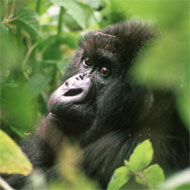
Letter appears to request endangered species from Africa
Wildlife groups are urging the Chinese authorities not to allow imports of wild-caught endangered animals from Central Africa.
The plea comes after the details of a letter came to light, referencing a request from a Chinese company asking for wild animals to be exported to two zoos in China.
According to the Born Free Foundation, the letter refers to a request for 12 mountain gorillas, 16 bonobos, 16 chimpanzees, eight African manatees and 20 okapi, to be sent from the Democratic Republic of Congo (DRC), to Taiyuan and Anji Zhonghan zoos.
Born Free says the letter was a response to Mr Liu Min Heng, CEO of Tianjing Junheng International Trade Corporation Ltd; from DRC’s environment minister, Dr Amy Ambatobe Nyongolo. It proposes to send a team from the DRC’s Institut Congolais pour la Conservation de la Nature to inspect the zoos’ premises in China.
Will Travers OBE, who is co-founder and president of Born Free, said: “There is nothing to suggest that this is not an authentic communication and I am sure that our sense of profound shock and outrage will be shared by conservation experts and NGOs, as well as the international community and the public at large.
“To imagine dozens of individual mountain gorillas, okapis, bonobos being caught from the wild and destined for a lifetime in captivity is outrageous.”
Should the proposals go ahead, Mr Travers warned that capturing these animals from the wild will put lives at risk. In addition, it is feared that the zoos in question will not be able to meet the complex needs of the animals - assuming they survive capture and transport.
There are also concerns that the animals may be used in “demeaning and degrading public performances”.
Born Free and 15 other civil society groups have written to CITES authorities, requesting them to intervene on this issue as a matter of urgency.
A petition on Change.org is also urging the Congolese Government not to allow the export of wild animals to China.
Image © Ian Redmond


 Companies marketing medicines for small pets exempt from authorisation must submit their annual return to the Veterinary Medicines Directorate (VMD) by 30 November 2026.



