


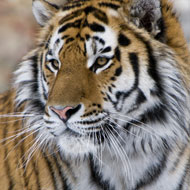
Hunting and human infrastructure forcing animals to flee daylight
New US research has found that mammals are becoming more nocturnal in response to human activity.
A study published in the journal Science shows that, on average, mammals are 1.36 times more nocturnal as a result of human disturbance. This finding was consistent across carnivore and herbivore species of all body sizes greater than 1kg.
The study was led by researchers at UC Berkeley, California, and supported by the National Science Foundation.
“While we expected to find a trend towards increased wildlife nocturnally around people, we were surprised by the consistency of the results,” explained lead author Kaitlyn Gaynor. “Animals responded strongly to all types of human disturbance, regardless of whether people actually posed a direct threat, suggesting that our presence alone is enough to disrupt their natural patterns of behaviour.”
In the study, researchers monitored 62 species, including deer, tigers and wild boar, across six continents. For each species, the team quantified the difference in animal nocturnally under low and high human disturbance.
The researchers found that animals that naturally split their activity evenly between the day and night, increased their activity at night by 68 per cent. This pattern held across different types of human disturbance, including mountain biking, hunting and infrastructure such as roads.
“We hope our findings will open up new avenues for wildlife research in human-dominated landscapes,” said Gaynor. “We still have a lot to learn about the implications of altered activity patterns for the management of wildlife populations, interactions between species, and even human-induced evolution.”


 Companies marketing medicines for small pets exempt from authorisation must submit their annual return to the Veterinary Medicines Directorate (VMD) by 30 November 2026.



