


Majority of top rabbit health issues ‘down to diet’
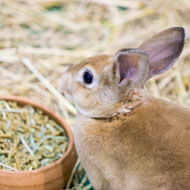
Over 85 per cent of vets in the East of England had serious concerns about the impact of poor nutrition on rabbit health.
Rabbit diet is in the spotlight this week as the BVA reveals five out of the top six health problems seen in practice are down to poor diet.
The most recent Voice of the Veterinary Profession found 85.5 per cent of vets in the East of England had serious concerns about the impact of poor nutrition on rabbit health.
Whilst many owners now know that carrots should only be fed as an occasional treat, many myths about feeding prevail, meaning many vets are seeing rabbits with preventable, or sometimes even fatal health conditions, such as obesity, gut problems and dental disease.
Coinciding with Rabbit Awareness Week (2-10 June), the BVA has released a series of top tips for pet owners.
1. 80% of a rabbit’s diet should be good quality hay, grass or a mixture of both: Rabbits will spend hours grazing on hay or grass, and good quality fodder ensures they don’t have tummy troubles or grow long in the tooth. Rabbits’ teeth grow continuously throughout their lives, so they need to chew hay or grass to help keep their teeth to a correct shape and length. For indoor rabbits, freshly picked grass is suitable, but avoid clippings as they ferment quickly. Alfalfa hay is high in calcium and should generally be avoided in adult rabbits.
2. Move away from muesli: Although muesli diets are colourful and often more attractive to rabbits than pellets, they encourage selective feeding and predispose the animals to dental disease and obesity. Rabbits should be fed a small amount of pellets daily - about an egg cup full – as they are a good complementary source of vitamins and minerals.
3. Carrot tops, not carrots: Despite the myths perpetuated by cartoon and storybook characters, carrots are actually not good for rabbits as they are high in sugar content, and should only be given occasionally as a treat. Green carrot tops are a more appropriate snack.
4. 15% of a rabbit’s diet should be made up of a variety of plants and vegetables: Vegetables such as courgettes, spring greens, broccoli and curly kale, herbs such as basil and parsley, and plants such as dandelions and burdock are some good options. Avoid certain lettuces like iceberg, which contain a secretion called lactucarium that can be dangerous in large quantities. It is important that you offer a variety of leafy greens rather than rely on the same one or two items every time.
5. Eating their own poo is normal: Rabbits produce two types of faecal pellets, although you may only ever see one type! They produce hard round faecal pellets that are passed throughout the day, but usually at dawn and dusk, rabbits produce soft faeces called caecotrophs, which contain proteins, fatty acids, vitamins and minerals and serve as an additional source of nutrients.


 Eligible members of BEVA will be able to vote for their Council team until Monday, 17 August 2026. Members will have received an election email on 17 July.



