


New resources to help breed out hip and elbow dysplasia
It is hoped that more breeds will be added in the near future, as more breeders hip and elbow score their dogs.
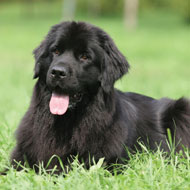
The Kennel Club has developed new breeding resources for Newfoundlands and Dogue de Bordeaux, to help breed away from elbow and hip dysplasia.
After consultation with the breed clubs, estimated breeding values (EBVs) were created for elbow grades in Newfoundlands and hip scores in Dogue de Bordeaux.
EBVs measure genetic risk using Kennel Club data to link hip and elbow scores for individual dogs - recorded through the BVA/Kennel Club health schemes - with the available data from all of its relatives.
Originally developed with scientists from the Animal Health Trust, Roslin Institute and the Royal (Dick) School of Veterinary Studies, EBVs are currently available for 29 dog breeds. It is hoped that more breeds will be added in the near future, as more breeders hip and elbow score their dogs.
Dr Tom Lewis, a quantitative geneticist at the Kennel Club, said: “The latest EBVs for the Newfoundland and Dogue de Bordeaux will be available as part of the Kennel Club’s online Mate Select resource, which helps breeders to make the best breeding choices.
“We hope that anyone breeding pedigree dogs, will use – and be encouraged by the veterinary community and their peers to use – Mate Select, which helps dog breeders make decisions based on robust data that estimates genetic risk, something that will undoubtedly help to protect the future of our pedigree dogs.”


 Eligible members of BEVA will be able to vote for their Council team until Monday, 17 August 2026. Members will have received an election email on 17 July.



