


SRUC scientists to lead fight against Bovine TB
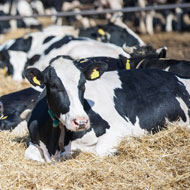
The scientists aim to develop a national database of genetic variations and a state-of-the-art genomic prediction tool.
SRUC scientists are teaming up with the Agriculture and Horticulture Development Board (AHDB) in the fight against Bovine Tuberculosis (TB).
Building on research which identified genetic variations between resistant and non-resistant dairy cattle, the scientists aim to develop a national database of genetic variations and a state-of-the-art genomic prediction tool. This will help farmers determine natural resistance traits and make informed decisions about which cattle to breed.
“This is a major development in the battle against TB,” said Professor Mike Coffey from SRUC. “It will increase data available for evaluations and create a new rich dataset for further research, leading to a reduction cow-to-cow transmission of TB.”
The undertaking will be split into two projects, the first of which will be in partnership with the Centre for Innovation Excellence in Livestock (CIEL) and will focus specifically on dairy cattle. A grant of £360,000 has been awarded to the AHDB and CIEL by Innovate UK to enable them to buy the genotype services.
“The additional funding provided by Innovate UK will allow a far greater number of cattle to be included in the database, ensuring greater accuracy when the improved genomic prediction tool is put into practice,” said Marco Winters, head of animal genetics for AHDB Dairy.
“This project has game-changing potential for the dairy industry and is further demonstration of how the industry is actively using genetics, as part of wider industry initiatives, toward a sustainable livestock sector."
The second project will make use of AHDB’s initial research on dairy genetic evaluations but will focus on beef cattle. Supported by the Department for Environment, Food and Rural Affairs (DEFRA), the project is more complicated owing to the number of different beef cattle breeds in comparison to dairy cattle.
“Bovine TV is a slow-moving, insidious disease which presents many challenges. That is why we are taking strong action to deliver our 25-year strategy to eradicate the disease through tighter cattle measures, improved biosecurity and badger control in areas where the disease is rife," said farming minister George Eustice MP.
“Reducing the risk of disease entering a farm is crucial to end the devastation of bovine TB and that is why we have chosen to support this project which has the potential to lead to reductions in its incidence.”
The beef cattle project is already underway and the dairy project will commence later this year. AHDB states that current control measures must continue to be adhered to as part of the UK's bTB eradication strategy.


 Companies marketing medicines for small pets exempt from authorisation must submit their annual return to the Veterinary Medicines Directorate (VMD) by 30 November 2026.



