


Dogs with noise fear ‘should be assessed for pain’ - study
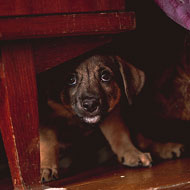
Behavioural signs included shaking, trembling and hiding.
Vets should routinely examine dogs for pain when they present with noise sensitivity, a new study suggests.
Scientists from the UK and Brazil believe that pain - which may be undiagnosed - is made worse when a noise makes the dog tense up or ‘start’, putting extra stress on inflamed muscles and joints. As a result, the pain is associated with the loud sound, causing noise sensitivity and avoidance of certain areas.
The study, which has been published in Frontiers in Veterinary Science, is the first to explore this phenomenon.
Researchers assessed two groups of dogs with noise anxiety, one of which had been diagnosed with underlying musculoskeletal pain and the other of which had not.
In both cases, behavioural signs included shaking, trembling and hiding, but those with diagnosed pain were more likely to avoid areas where they had had a bad experience with noise.
The dogs with musculoskeletal pain also started to show signs of fear later in life than their pain-free counterparts - four years later on average. Noise triggers ranged from fireworks, thunderstorms and aeroplanes to gunshots, cars and motorbikes.
Veterinary medicine student Ana Luisa Lopes Fagundes led the research at the University of Lincoln as part of Brazil’s Science Without Borders Scheme. She said the dogs with pain seemed to form “much wider associations” with the noise.
“For example they would often tend to avoid not just the place where they had the bad experience but much larger areas too,” she explained. “These dogs also tended to avoid other dogs as well. The findings of this study are really important because they contribute to the dog`s welfare and improved behaviour as pain could be identified and subsequently treated.”
Professor Daniel Mills from the University of Lincoln added: “These results are consistent with the suggestion that whenever there is a late age onset to a behaviour problem, medical issues including those related to pain, should be carefully evaluated. It is worth owners being aware that once pain is successfully managed, the previously learned associations with noise may persist and require their own targeted behaviour modification programme.”
Vets are now being advised to conduct a thorough physical examination when patients are presented with any behaviour problems related to noise.


 Eligible members of BEVA will be able to vote for their Council team until Monday, 17 August 2026. Members will have received an election email on 17 July.



