


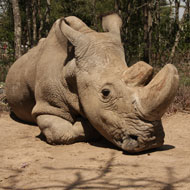
Sudan was euthanised on welfare grounds aged 45
The world’s last male northern white rhino has been euthanised due to ill health, the Ol Pejeta Conservancy in Kenya has confirmed.
Sudan had been undergoing treatment for age-related changes that caused degenerative changes in his muscles and bones, combined with extensive skin wounds.
Vets made the decision to euthanise him yesterday (19 March) at the age of 45, after his condition worsened significantly, leaving him suffering a great deal and unable to stand.
Richard Vigne, Ol Pejeta’s CEO said: “We on Ol Pejeta are all saddened by Sudan’s death.
“He was a great ambassador for his species and will be remembered for the work he did to raise awareness globally of the plight facing not only rhinos, but also the many thousands of other species facing extinction as a result of unsustainable human activity.”
His death leaves just two female northern white rhinos on the planet - his daughter Najin and granddaughter Fatu, who also live at Ol Pejeta.
Saving the subspecies
In a world-first, international scientists are now attempting to safely remove egg cells from Najin and Fatu, fertilise them with semen previously collected from northern white rhinos and insert the resulting embryos into female southern white rhinos acting as surrogates.
This has never been done in rhinos and does not come without risks, Ol Pejeta said. However, options are running out as attempts to breed the last four northern whites from 2009 were unsuccessful. Plans to breed the northern white females with a southern white male also failed in 2014.
It was later discovered that neither of the females could conceive naturally, and only was one fertile enough to conceive artificially. The other male, Suni, died of natural causes in October 2014.
Jan Stejskal, director of international projects at Dvůr Králové Zoo said: “Sudan was the last northern white rhino that was born in the wild. His death is a cruel symbol of human disregard for nature and it saddened everyone who knew him.
“But we should not give up. We must take advantage of the unique situation in which cellular technologies are utilised for conservation of critically endangered species. It may sound unbelievable, but thanks to the newly developed techniques even Sudan could still have an offspring.”
Image © Jan Stejskal


 Companies marketing medicines for small pets exempt from authorisation must submit their annual return to the Veterinary Medicines Directorate (VMD) by 30 November 2026.



