


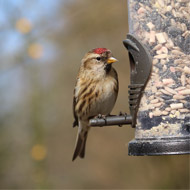
Public urged to feed birds in moderation and rotate feeding sites
Garden bird feeders put wild birds at risk of serious diseases, according to research led by scientists from the Zoological Society of London (ZSL).
A study published in the journal Philosophical Transactions of the Royal Society B. found that garden feeders can encourage birds to repeatedly gather in the same location. Scientists say this often brings them into regular contact with other species they wouldn’t otherwise be in contact with.
The study was carried out in partnership with the British Trust for Ornithology (BTO) and Fera Science Ltd. The scientists analysed more than 25 years’ worth of data on the frequency of wild bird health threats, focusing on protozoal (finch trichomonosis), viral (Paridae pox) and bacterial (passerine salmonellosis) diseases.
“Our study shows how three of the most common diseases that affect British garden birds have changed both dramatically and unpredictably over the past decade, both in terms of the species they affect and their patterns of occurrence,” said lead author Dr Becki Lawson from ZSL’s Institute of Zoology.
“Both finch trichomonosis and Paridae pox have emerged recently, causing disease epidemics affecting large numbers of birds, while passerine salmonellosis – previously a common condition – appears to have reduced to a very low level. These conditions have different means of transmission – so deepening our understanding of disease dynamics will help us develop best practice advice to ensure that feeding garden birds also helps to safeguard their health”.
The study makes some recommendations to minimise the potential risks assisted with feeding wild birds. When disease outbreaks occur, people are encouraged to report their observations to the Garden Wildlife Health project, seek veterinary guidance, and consider a temporary halt to garden feeding to encourage birds to disperse.
“We’re calling on everyone who feeds wild birds to be aware of their responsibilities for preventing disease,” commented co-author Kate Risely from the BTO. “Simple steps we’d recommend include offering a variety of food from accredited sources, feeding in moderation so that feeders are typically emptied every 1-2 days, the regular cleaning of bird feeders, and rotation of feeding sites to avoid accumulation of waste food or bird droppings.”


 Companies marketing medicines for small pets exempt from authorisation must submit their annual return to the Veterinary Medicines Directorate (VMD) by 30 November 2026.



