


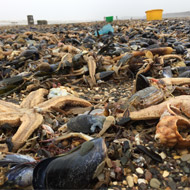
Starfish, crabs, lobsters ‘ankle deep’ in places
Tens of thousands of marine creatures have washed up along the east coast of Britain after the ‘Beast from the East’ brought freezing temperatures and rough weather.
According to Yorkshire Wildlife Trust, starfish, crabs, lobsters and mussels are ‘ankle-deep’ in places along the Holderness coast in Yorkshire. In a press release, it said that many of these animals are dead, except for a number of lobsters.
Scenes similar to this have also been reported on the shores of Kent and Norfolk.
“There was a three-degree drop in sea temperature last week which will have caused animals to hunker down and reduce their activity levels,” explained Bex Lynam, North Sea Marine Advocacy Officer, Yorkshire Wildlife Trust.
“This makes them vulnerable to rough seas – they became dislodged by large waves and washed ashore when the rough weather kicked in. Larger animals such as dolphins are more mobile and can save themselves by swimming away when this sort of thing happens.”
Yorkshire Wildlife Trust is working with local fisherman to rescue the lobsters that are still alive, gathering them into buckets and taking them to tanks in Bridlington for care.
Ms Lynam continued: “This area is very important for shellfish and we work alongside fisherman to promote sustainable fisheries and protect reproductive stocks. It’s worth saving them so that they can be put back into the sea and continue to breed.”
Image (C) Yorkshire Wildlife Trust.


 Companies marketing medicines for small pets exempt from authorisation must submit their annual return to the Veterinary Medicines Directorate (VMD) by 30 November 2026.



