


Problem-solving a 'key factor’ for the success of grey squirrels
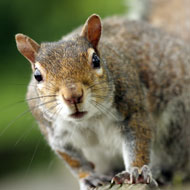
The grey squirrels’ success might be down to its ability to problem-solve.
Study shows greys are better at complex tasks than reds
New research led by the University of Exeter has revealed insights into why grey squirrels are flourishing in the UK, at the cost of our native reds.
Writing in the journal Animal Behaviour, researchers suggest that the grey squirrels’ success might be a result of its ability to solve problems.
In the study, researchers set up tasks and observed wild red and grey squirrels performing them. The squirrels were required to open a transparent lid and carry out a more difficult task that involved pushing and pulling levers to get hazelnuts.
While both species were successful at the simple task, a much higher percentage of grey squirrels were able to solve the more difficult one (91 per cent of grey squirrels, compared to 62 per cent of reds).
Speaking to The Guardian, Pizza Ka Yee Chow of Exeter’s centre for research in animal behaviour said: “Many factors have been considered to explain why grey squirrels are more successful when they move into areas where red squirrels live.
“These factors include disease resistance and the fact grey squirrels are bigger, but our research shows problem-solving could be another key factor for the success of greys. This might be especially important for an invasive species like grey squirrels, as they have evolved elsewhere and have to adapt to their surroundings.”
The paper notes that ineffective foraging and food extraction can lead to substandard fitness among red squirrels, impairing their ability to reproduce.
“It is not yet clear whether grey squirrels are born better problem-solvers, or whether they work harder because they’re an invasive species living outside their natural environment,” Chow continued.
“The current stage of our research is to look at this, and the results may give us more insight into the likely future of both species.”


 Companies marketing medicines for small pets exempt from authorisation must submit their annual return to the Veterinary Medicines Directorate (VMD) by 30 November 2026.



