


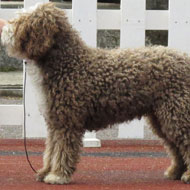
Breeders encouraged to test for inherited diseases
Two new DNA testing schemes have been approved for neuroaxonal dystrophy (NAD) and congenital hypothyroidism with goiter (CHG) in Spanish water dogs.
The tests were approved by the Kennel Club following consultation with the breed’s health co-ordinator, on behalf of the breed club.
NADs in both animals and humans are a group of rare, inherited neurodegenerative disorders. Affected dogs display various neurological problems including gait abnormalities, behavioural changes and incontinence. Onset begins around six to 11 months old and symptoms progress slowly. In Spanish water dogs, the disease is caused by a mutation in the gene TECPR2.
CHG is caused by a mutation in the TPO gene, which prevents production of thyroid peroxidase, leading to an inability to produce thyroid hormones.
In puppies with CHG, growth delay becomes apparent at around two weeks of age. While unaffected puppies in the litter will experience a growth spurt at this age, affected puppies will stop developing. They may suffer a fatal seizure at this time or be euthanised without diagnosis, according to the Spanish Water Dogs Club.
With appropriate nursing care, CHG-affected puppies may survive, but opening of eyes and ear canals is significantly delayed and hearing and cognition are impaired long-term. Thyroid glands continue to enlarge over time and delays to the lengthening of the bones in the legs and spine causes irreversible dwarfism.
Early diagnosis and treatment alleviates most abnormalities, but affected dogs will not achieve normal development.
Caroline Kisko, Kennel Club Secretary, said: “We would encourage breeders of Spanish water dogs to use these DNA tests in order to protect and improve the health of this lovely breed.
“DNA tests not only assist breeders in producing healthier dogs but they enable puppy buyers to be better aware of health issues that may affect their chosen breed and help them to seek responsible breeders.”
Image by Томасина/Wikimedia Commons/CC BY-SA 3.0


 Eligible members of BEVA will be able to vote for their Council team until Monday, 17 August 2026. Members will have received an election email on 17 July.



