


Scottish red squirrel populations stabilise
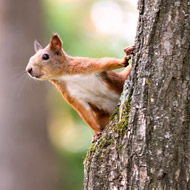
Squirrel populations are measured using feeder boxes that are placed in the same area of woodland every spring.
Red squirrel populations in Scotland have stabilised, according to figures published by Saving Scotland’s Red Squirrels.
The results of the 2017 Squirrel Survey show that there has been a significant increase in red squirrel distribution across the North East, particularly in areas close to the City of Aberdeen. In the south of Scotland, red squirrels have maintained their range and have even slightly expanded their occupancy.
Mary-Anne Collis, red squirrel conservation officer for Argyll, the Trossachs and Stirling, said: "In the Central Lowlands, red squirrels are holding their ground and as a result, we’ve started to see them in areas where they haven’t been seen for a long time. This is particularly noticeable to the south and east of Loch Lomond and the Trossachs National Park, which is now predominantly a red-only zone.”
Whilst red squirrels have successfully maintained their range in most parts of the South, the survey shows that it is a very different picture for Berwickshire, where reds are now rarely seen.
Dr Mel Tonkin, Saving Scotland's Red Squirrels project manager, said: “Unfortunately red squirrel numbers have continued to fall in parts of the Scottish Borders, especially since the arrival in Berwickshire of the deadly Squirrelpox virus from south of the border in 2011. However, there are still good populations of red squirrels from Galashiels and Jedburgh westwards, and Saving Scotland’s Red Squirrels is carrying out conservation work aimed at safeguarding these squirrels.
“In Dumfries and Galloway, red squirrels continue to do well but are threatened by increasing records of grey squirrels which appear to be spreading into Nithsdale from the east and north. It is vital that the work we do here is stepped up to make sure these red squirrel populations remain healthy.”
Squirrel populations are measured using feeder boxes that are placed in the same area of woodland every spring. Each box contains a sticky pad to collect hair samples, which are identified under a microscope.
The Scottish Wildlife Trust is currently seeking volunteer in South Scotland to take part in the 2018 squirrel survey, which takes place between March and April. For more information, email Gill Hatcher ghatcher@scottishwildlifetrust.org.uk


 Companies marketing medicines for small pets exempt from authorisation must submit their annual return to the Veterinary Medicines Directorate (VMD) by 30 November 2026.



