
Your data on MRCVSonline
The nature of the services provided by Vision Media means that we might obtain certain information about you.
Please read our Data Protection and Privacy Policy for details.

In addition, (with your consent) some parts of our website may store a 'cookie' in your browser for the purposes of
functionality or performance monitoring.
Click here to manage your settings.
If you would like to forward this story on to a friend, simply fill in the form below and click send.

Your friend's email:
Your email:
Your name:
 
 
Send Cancel

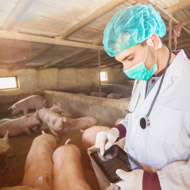
Animal welfare a top food concern, survey finds
Animal welfare was listed as a top food concern in the FSA's Biannual Public Attitudes Tracker.

FSA survey monitors changes in consumer attitudes

Animal welfare has been named one of the top food issues of concern in the Food Standards Agency’s Biannual Public Attitudes Tracker.

The survey, conducted with consumers across England, Wales and Northern Ireland, monitors changes in consumer attitudes towards the FSA and food-related issues.

Amongst the top food issues of concern is the amount of sugar in food, food waste, food prices and animal welfare. Respondents also raised concerns about food hygiene when eating out, food poisoning, food additives and chemicals from the environment.

Forty-five per cent of respondents reported a concern about food safety in UK restaurants, pubs, cafes and takeaways, whilst 42 per cent of respondents reported a concern about food safety in UK shops and supermarkets.

The survey also revealed that the majority of people trust that food is what it says it is and that it is accurately labelled (74 per cent).

Salmonella and E-coli were by far the most commonly known types of food poisoning (total awareness of 89 per cent and 82 per cent respectively). The perceived most likely sources of food poisoning were raw chicken or turkey (79 per cent), followed by shellfish (54 per cent), reheated take-away food (47 per cent) and eggs (38 per cent).

The survey took place in November 2017 with a representative sample of 1,989 adults. 

Become a member or log in to add this story to your CPD history

Equine Disease Surveillance report released for Q4 2025

News Story 1
 The latest Equine Disease Surveillance report has been released, with details on equine disease from Q4 of 2025.

The report, produced by Equine Infectious Disease Surveillance, includes advice on rule changes for equine influenza vaccination.

Statistics and maps detail recent outbreaks of equine herpes virus, equine influenza, equine strangles and equine grass sickness. A series of laboratory reports provides data on virology, bacteriology, parasitology and toxicosis.

This issue also features a case study of orthoflavivus-associated neurological disease in a horse in the UK. 

Click here for more...
News Shorts
RCVS annual renewal fee for vets due

RCVS' annual renewal fee for veterinary surgeons is now due. Vets must pay their renewal fee before Wednesday, 1 April 2026.

This year's standard annual fee has increased to 431 from last year's 418. This is an approximately three per cent increase, as approved by RCVS Council and the Privy Council.

Tshidi Gardner, RCVS treasurer, said: "The small fee increase will be used to help deliver both our everyday activities and our new ambitious Strategic Plan, which includes aims such as achieving new legislation, reviewing the Codes of Professional Conduct and supporting guidance, and continuing to support the professions through activities such as the Mind Matters Initiative, RCVS Academy and career development."

A full breakdown of the new fees is on the RCVS website. Information about tax relief is available on the UK government website.

