


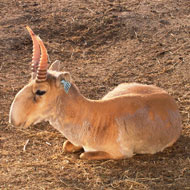
Unusual weather conditions contributed to deaths, study finds
A new study suggests that hot, humid weather conditions contributed to the sudden deaths of 200,000 saiga antelopes in Kazakhstan in 2015.
In just three weeks, whole herds of healthy animals died from haemorrhagic septicaemia in the Betpak-Dala region, which is equivalent to the size of the British Isles.
Scientists from several laboratories identified the bacterium Pasteurella multocida to be the causative agent, but this pathogen had likely been living harmlessly in the saigas’ tonsils up until that point.
Now, a new one health study published in Science Advances, shows that a number of separate factors contributed to the baffling deaths. In particular, the paper identifies climatic factors such as increased humidity and raised air temperatures in the days before the die-offs. This is believed to have triggered an opportunistic bacterial invasion of the bloodstream, causing septicaemia.
The research also suggests that such large mass mortality events are unprecedented in other large mammal species, and tend to occur during calving.
Saiga bear the largest calves of any ungulate species as it allows the calves to develop quickly and follow the mothers on migrations. However, it also means that females are physiologically stressed during calving.
With this in mind, high levels of mortality are expected, but researchers say mass die-offs appear to be happening more often. In 2017, for example, 60 per cent of the Mongolian saiga subspecies died from a virus that spilled over from livestock. Other factors that threaten the future of the species include high levels of poaching since the 1990s and increasing levels of infrastructure development.
Scientists are warning that another mass die-off from disease could reduce the population to an unrecoverable level. They called for an integrated approach to tackle the threats, which is an ongoing process under the Convention on Migratory Species.
The research was carried out by an international, interdisciplinary team that looked at the wildlife, livestock, environmental and human impacts that have driven disease emergence in saiga. This one health approach helped the team to understand the wider significance of the die-offs, beyond the causes of the 2015 epidemic.
Image by Vladimir Yu. Arkhipov, Arkhivov/Wikimedia Commons/CC BY-SA 3.0


 Companies marketing medicines for small pets exempt from authorisation must submit their annual return to the Veterinary Medicines Directorate (VMD) by 30 November 2026.



