


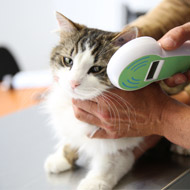
Out-of-date contact details rendering many chips useless
Thousands of cats going into the care of the RSPCA do not have a microchip or up-to-date contact details, according to new figures.
Figures released by the charity show that 5,647 cats were taken in by RSPCA centres in England and Wales during 2017. However, a staggering 4,896 of these did not have a chip and, of those that did, many had out-of-date contact details.
“Not only are a lot of cats still not being chipped but, during one week last summer, our London veterinary hospitals had nine cats with out-of-date microchip details making it extremely difficult to track down their owners,” said Caroline Allen, director of the RSPCA’s London hospitals.
“We see cases where we would love to reunite microchipped cats with their owner but can't because the details have not been updated.”
One cat that could not be reunited with his owner is four-year-old Elvis. Elvis arrived at the RSPCA’s Southall Cattery in December with a fractured pelvis and no microchip. Sadly his owner could not be traced and Elvis is now on the hunt for a new forever home.
Another example is Gizmo, a ginger cat with a microchip that showed an adddress and number in Poland. Gizmo was found straying and poorly with diarrhoea, dehydration and a distended abdomen. However, because the microchip was registered to a Polish database, staff believe his owners did not update their details when they moved to the UK.
In light of their findings, the RSPCA is now calling on pet owners to get their cats microchipped and to ensure that details are kept up-to-date.
“Microchipping your pet is vitally important in ensuring that if anything happens to them, if they are lost or stolen, or hit by a car, then they can be returned to you,” Caroline continued.
“Despite our best efforts to find an owner, the most reliable way to identify a cat is to have him or her microchipped. If the contact details are out-of-date the chip is completely useless so it is vitally important to tell the chip company yourself if any contact details change.”


 Eligible members of BEVA will be able to vote for their Council team until Monday, 17 August 2026. Members will have received an election email on 17 July.



