


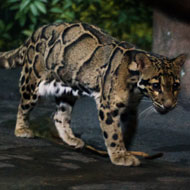
Animal has been recaptured but is alleged to have killed sheep
A clouded leopard escaped from a private property in Cornwall, it has emerged, after unexpected flooding affected the security of the site.
The animal has since been recaptured but is alleged to have killed some sheep on a local farm.
Devon and Cornwall Police said they were informed by the leopard’s owner that it had escaped its inner compound on Boxing Day.
A spokesperson said: “The leopard was still in its outer compound and efforts were being made by the owner to re-capture the animal. Officers were then informed by a local farmer that the leopard had broken out of its compound and had allegedly attacked some of his sheep. The animal was re-captured.”
According to the local council, the leopard’s owner has an appropriate dangerous wild animal license.
A statement from Cornwall Council reads: ‘A full audit of the premises and licence has been undertaken and the circumstances surrounding the escape fully investigated.
‘The incident occurred due to an unforeseeable severe weather event causing a flood in an area not known to be subject to flooding. The owner has taken appropriate measures to prevent possible future flooding events from affecting the security of the site.’
Clouded leopards are listed as ‘vulnerable’ on the IUCN Red List of Threatened Species. It is found across South East Asia and the Himalayas. Whilst the exact population number is unknown, the species is thought to be in decline due to habitat loss and poaching.
Image by Charles Barilleaux/Wikimedia Commons/CC BY 2.0


 Companies marketing medicines for small pets exempt from authorisation must submit their annual return to the Veterinary Medicines Directorate (VMD) by 30 November 2026.



