


Environmentalists develop novel device to track harbour seals
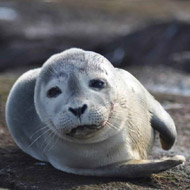
The harbour seal population in Orkney has fallen by around 70 per cent in recent years.
Environmentalists in Scotland have developed a novel way to keep track of a declining seal population.
Created by the University of St Andrews Sea Mammal Research Unit (SMRU) and colleagues at Vodafone, the mobile transmitter can track where harbour seals go at sea and relay that information when they return to the surface.
The device is attached to the seal to log data on behaviour, such as dive depth, location and temperature. It then delivers the information back to the researchers via the mobile network.
According to research by the SMRU, the harbour seal population in Orkney has fallen by around 70 per cent in recent years. The group has received government funding to investigate the causes of this decline.
With the data they receive back from the transmitters, the researchers hope to identify the causes of pollution as well as the various effects it has on the ocean’s ecosystem. The project, dubbed “The Internet of the Seas,” may also reveal insights into why seal numbers are dropping.
Dr Bernie McConnell, deputy director of the SMRU, has seen the impact we are having on our seas first hand from his research in the Orkney Islands and strongly believes we need to be taking much more care.
He said: “We have to think more carefully about how we use the oceans and ensure we don’t use the oceans as a dumping ground. It’s a living system and if we don’t take care of it, it will get ill. The drop in the harbour seal population could be one of those symptoms”.


 Companies marketing medicines for small pets exempt from authorisation must submit their annual return to the Veterinary Medicines Directorate (VMD) by 30 November 2026.



